
Recreate relevant cell context
Define the cell populations, density, material environment and spatial relationships that matter to the hypothesis.
For researchers
JetBio helps academic and institute teams assess whether modular bioprinting can solve a defined model limitation. Start with the biology, then choose the printing route, materials and evidence around the experiment.
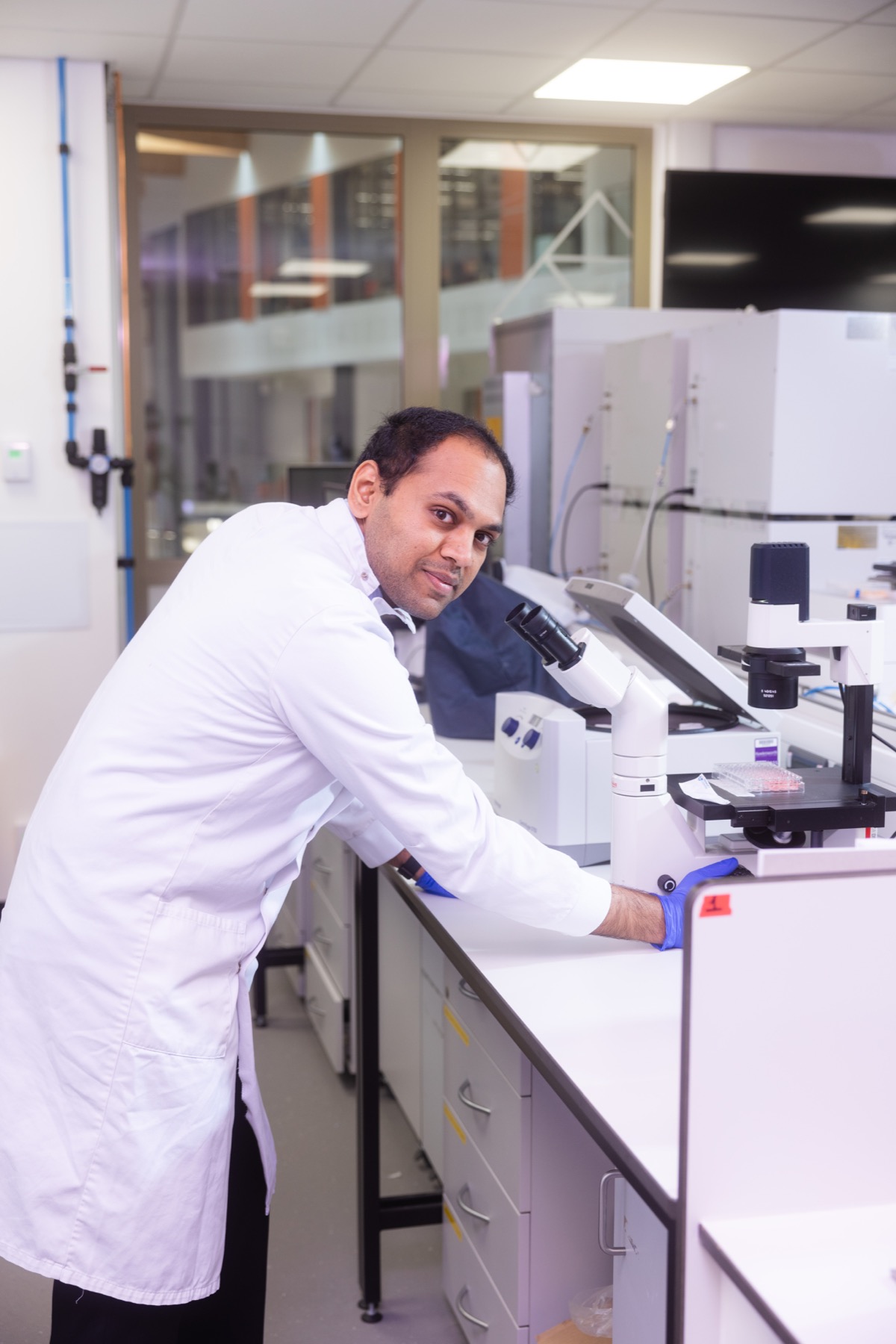
Start with the experimental need
A bioprinter is useful only when it improves the team's ability to create, repeat or study the model. JetBio begins with the scientific question and the decision the data must support.
Define the cell populations, density, material environment and spatial relationships that matter to the hypothesis.
Consider culture conditions, plate or substrate format, imaging, sampling and downstream analysis from the outset.
Set practical measures for print quality, cell response, repeatability and experimental usefulness before development begins.
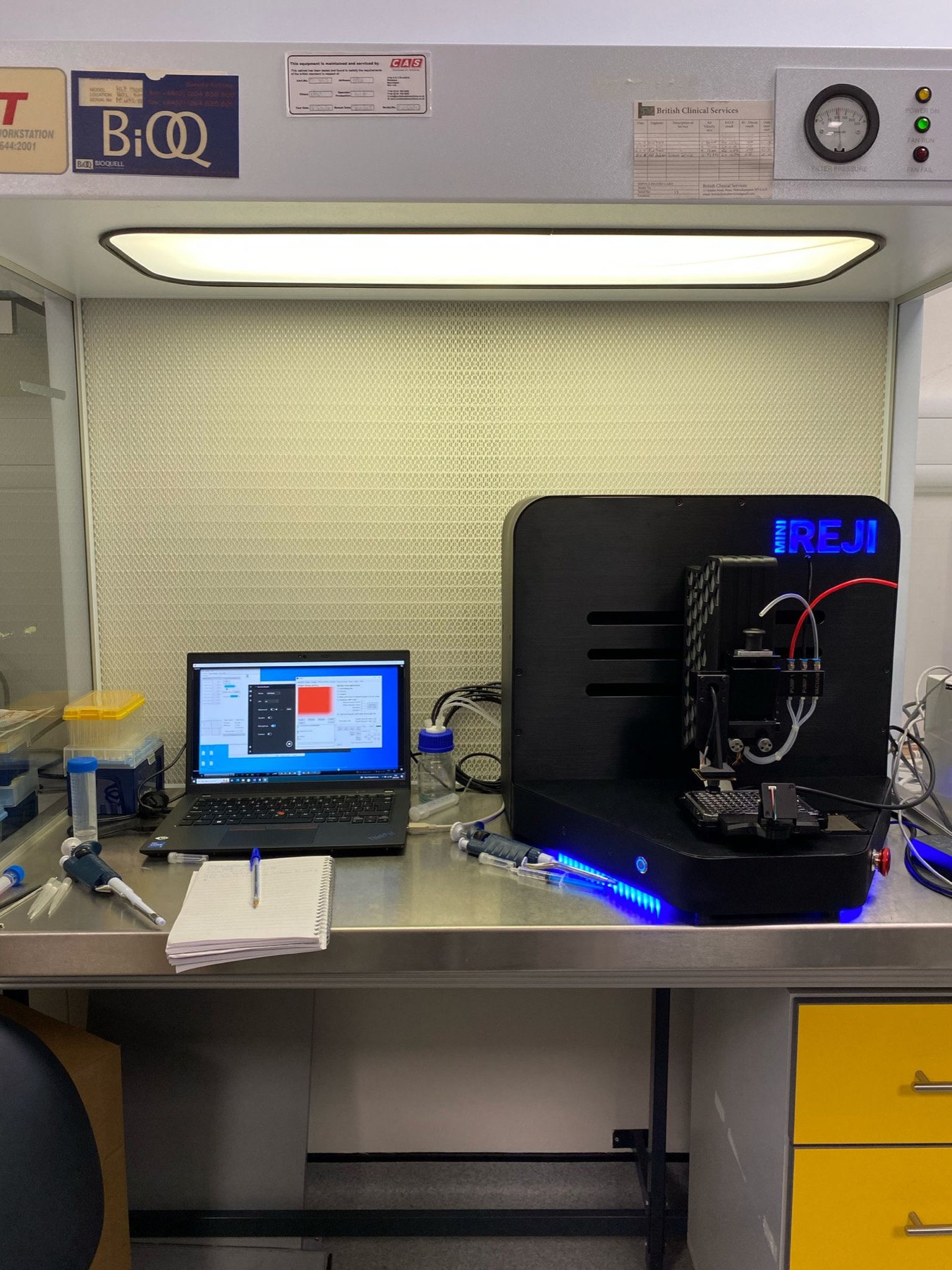
An adaptable research platform
MiniREJI brings reactive jet impingement, microvalve and inkjet development capabilities into one modular platform. Each mode has different material and deposition characteristics, so the appropriate route depends on the cells, chemistry, structure and readout.
Research journey
Share the biological question, current method, cells, materials, desired structure and endpoint.
Review the likely print mode, practical constraints, responsibilities and evidence threshold.
Turn the key unknowns into a bounded evaluation with agreed outputs and decision criteria.
Decide whether to refine, stop or progress towards a supported instrument and workflow pathway.
Application pathways
Consider cell density, supporting populations, extracellular matrix and spatial organisation.
Explore cancer modelsDesign developmental and stem-cell experiments around interactions, gradients and maturation.
Explore stem cell modelsConnect architecture and cell density to a defined functional readout and repeatability plan.
Explore cardiac modelsCurrent status These are research deployments and application-development activities, not commercial sales.
Frequently asked questions
JetBio is most relevant to teams with a defined model limitation involving cell density, spatial patterning, multiple materials or a difficult substrate or plate format. Fit is assessed against the biological question and intended readout.
Potentially. Compatibility depends on cell requirements, material behaviour, crosslinking, geometry and the selected print mode. JetBio reviews these factors before proposing feasibility work.
No. A useful first brief describes the model, the limitation in the current workflow, the desired format and the evidence that would justify a next step.
JetBio is progressing from research deployments towards a defined commercial configuration. Final specifications, availability, service terms and performance claims depend on the application and product-readiness stage.
Enquiry form
Share the biology, current limitation, cells, materials, format and evidence that would justify a next step.
Please do not include confidential, personal health or unpublished research data.
Start a useful conversation
See what is demonstrated today, what is still being validated and how JetBio separates research activity from commercial proof.