
Cell-filled gel droplets formed in flight
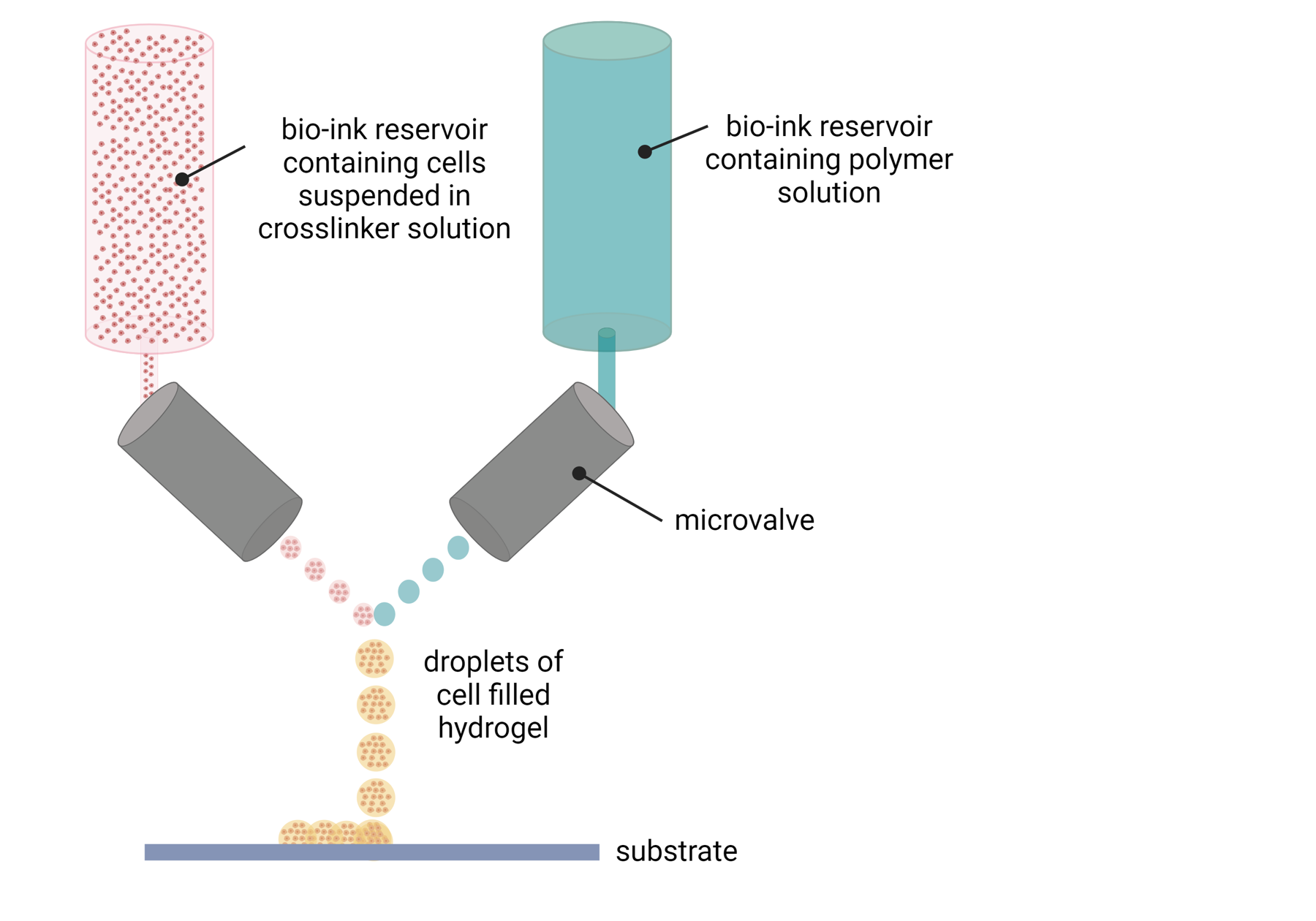
Two precursor streams impinge before deposition, creating gel droplets at the point of printing.
The JetBio platform
One adaptable development platform brings three complementary print modes into the same workflow. Start with the model requirements, then configure the deposition method, materials and format around them.
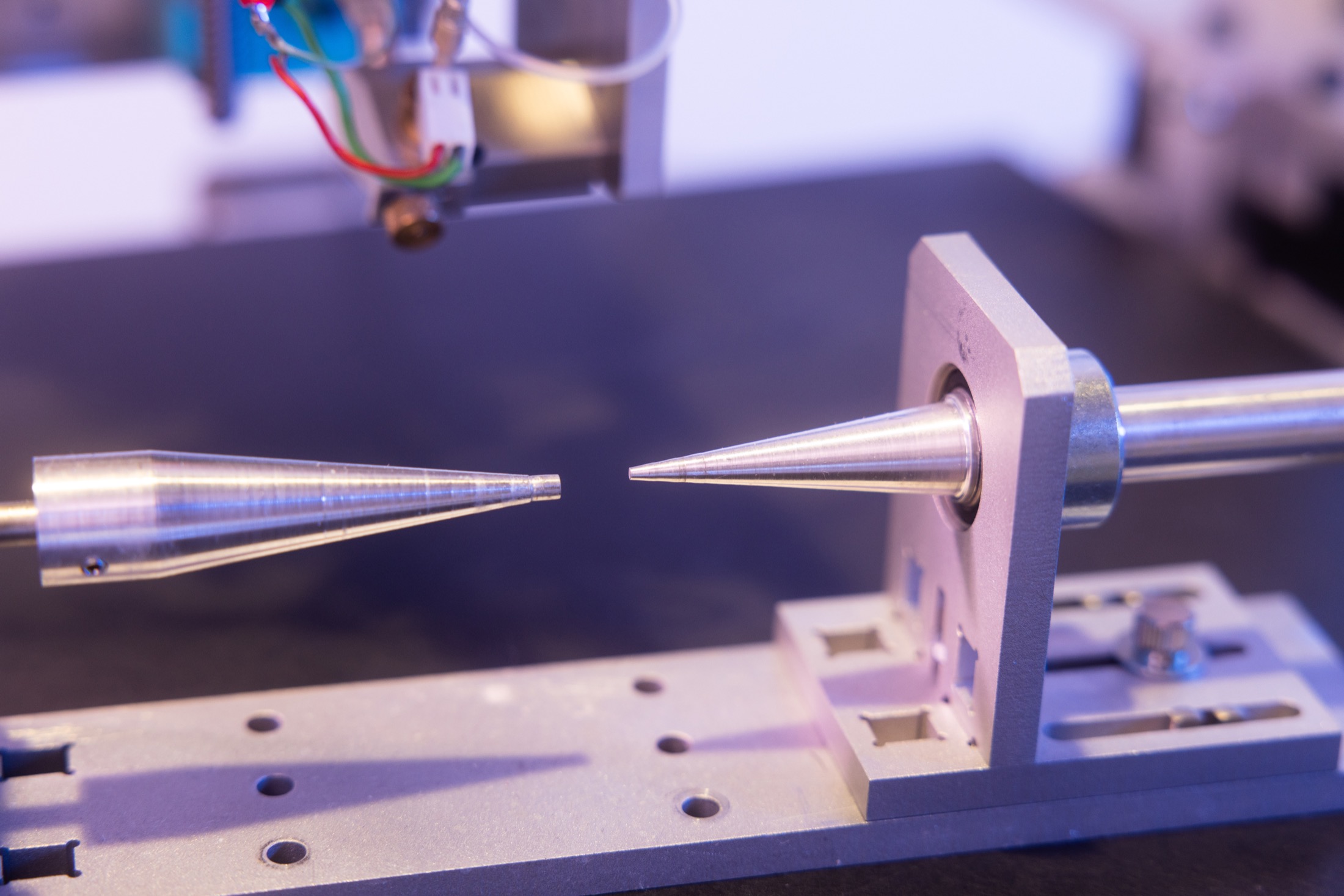
One platform, complementary capabilities
Many advanced 3D models need more than one deposition behaviour. JetBio’s modular approach is designed to reduce that compromise.
Two precursor streams impinge before deposition, creating gel droplets at the point of printing.
Microvalve dispensing supports patterned workflows and compatible biological materials.
Inkjet printing adds a route for compatible low-viscosity formulations and spatial patterning.
Reactive jet impingement
Reactive jet impingement, ReJI, directs two liquid precursor streams towards one another. They meet before reaching the substrate, forming cell-filled hydrogel droplets for deposition.
This architecture creates a distinct development route for researchers working with high cell-density gels, structured disease models and selected multi-material constructs. Suitability depends on the cell, chemistry, geometry and endpoint.
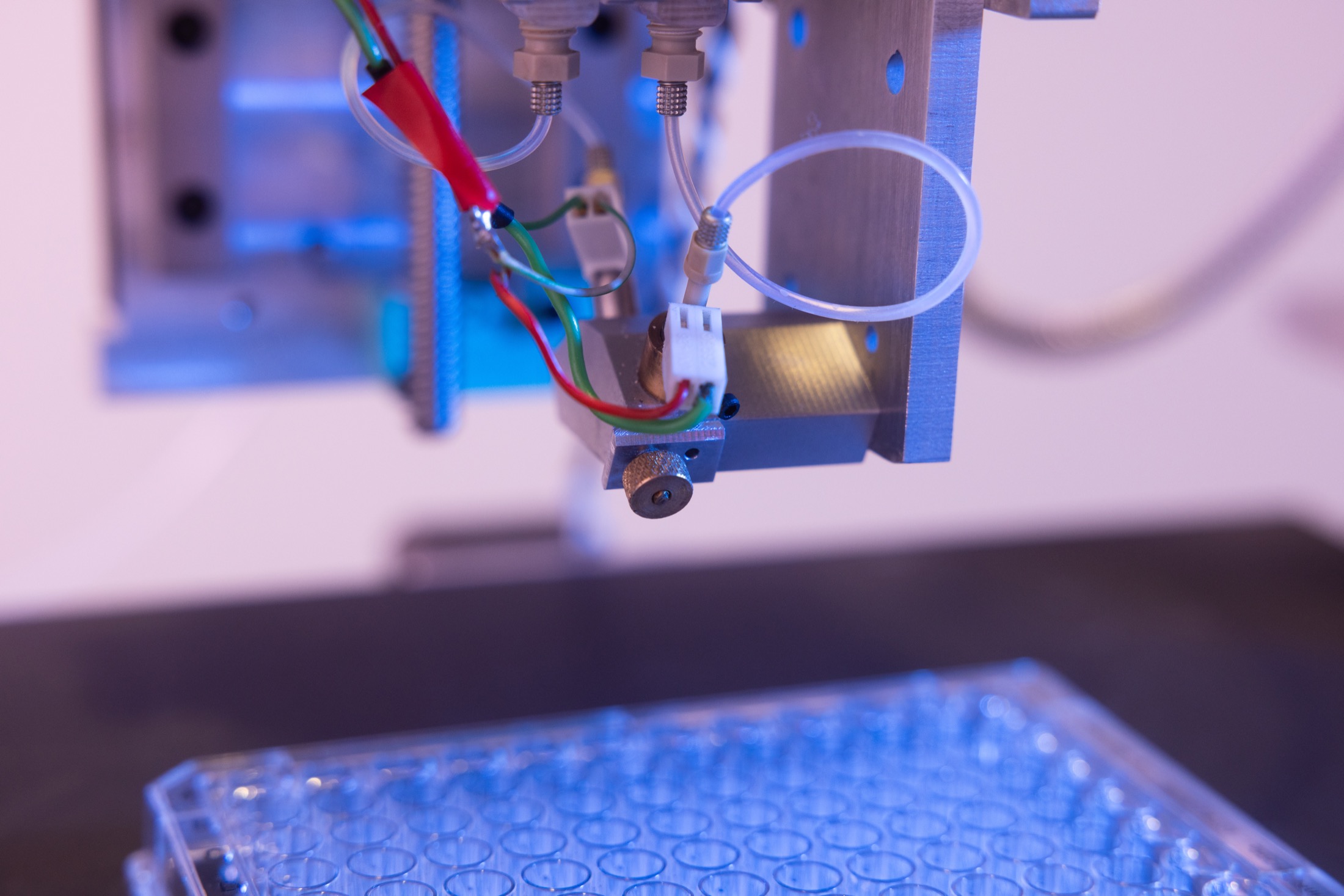
Designed around the workflow
The useful product is not the printer alone. It is the combination of hardware, control software, compatible materials, method development and support that gets a research team to a repeatable experimental workflow.
Published product framework
JetBio is completing the transition from research deployments to commercial product definition. Final performance ranges and configuration details are confirmed through the feasibility process.
The current platform is intended for research use. Final product labelling, performance claims, service terms and regulatory classification must be confirmed before purchase.
Common questions
Possibly. Compatibility is assessed against the selected print mode, material behaviour, crosslinking route, cells and desired geometry. We will not promise compatibility before feasibility review.
JetBio is currently developing commercial configurations through research deployments and scoped feasibility work. Availability, pricing and delivery depend on the required configuration and product-readiness stage.
That decision follows the biological and process requirements. ReJI, microvalve and inkjet offer different deposition behaviours, and a useful workflow may combine them.
The planned commercial model includes feasibility scoping, workflow development, onboarding and technical support. Exact deliverables are agreed within each project.
Start a useful conversation
Send us the cells, materials, format and readout you need. We will help you identify the most credible route to a feasibility study.