
Define the biological system
Specify cardiac and supporting cell populations, source, maturity and the material environment.
Application pathway: cardiac and safety research
Cardiac model development requires more than contractile cells. The biological composition, architecture, culture conditions, measurement method and repeatability plan must all serve the research question.
Start from function
A structured culture is valuable only when it supports a relevant, interpretable endpoint. Define function, timing, instrumentation and controls before choosing the print process.
Specify cardiac and supporting cell populations, source, maturity and the material environment.
Choose the functional, structural or molecular measurement and its sampling schedule.
State whether the work explores model development, biological mechanism or a selected safety question.
High-cell-density development
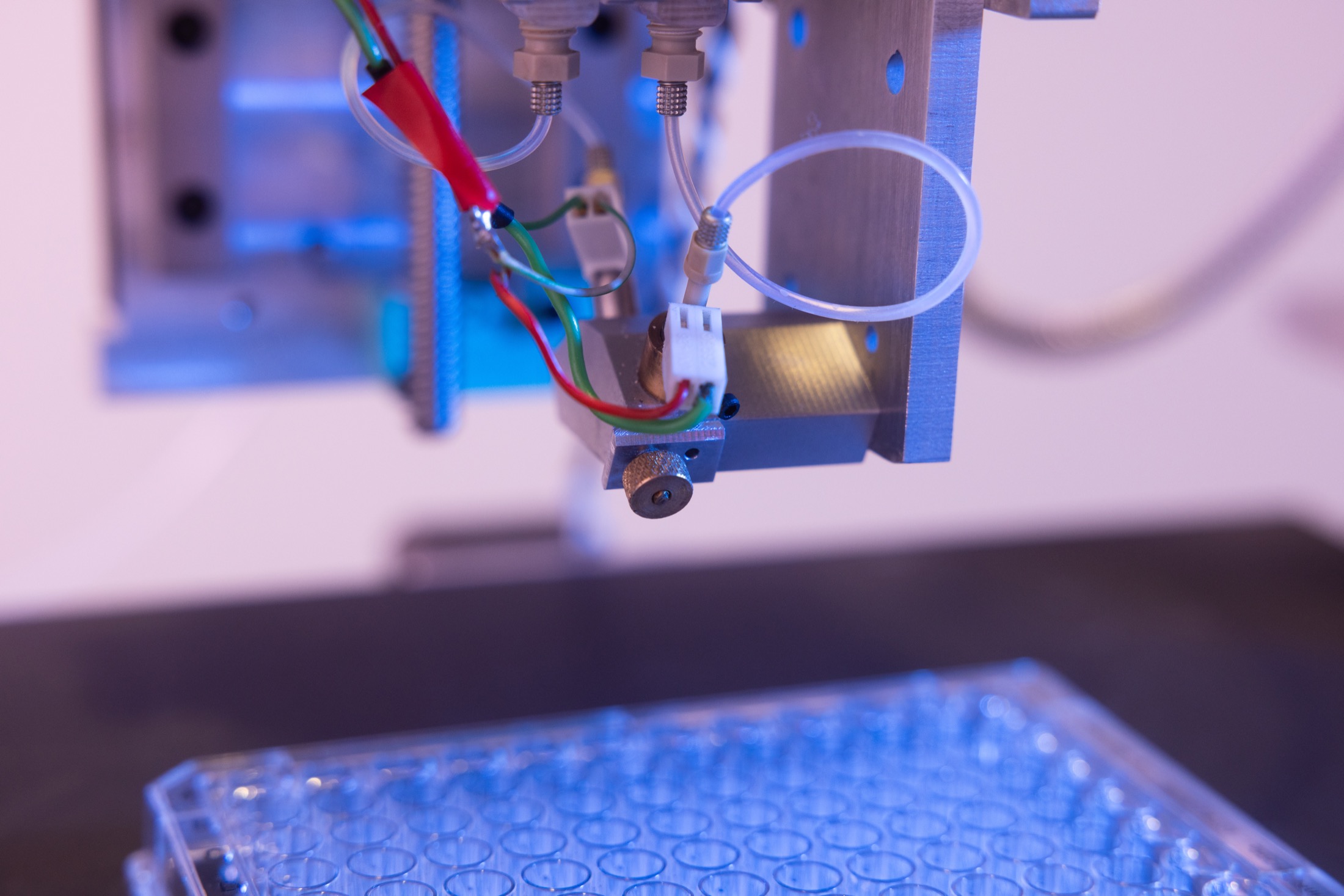
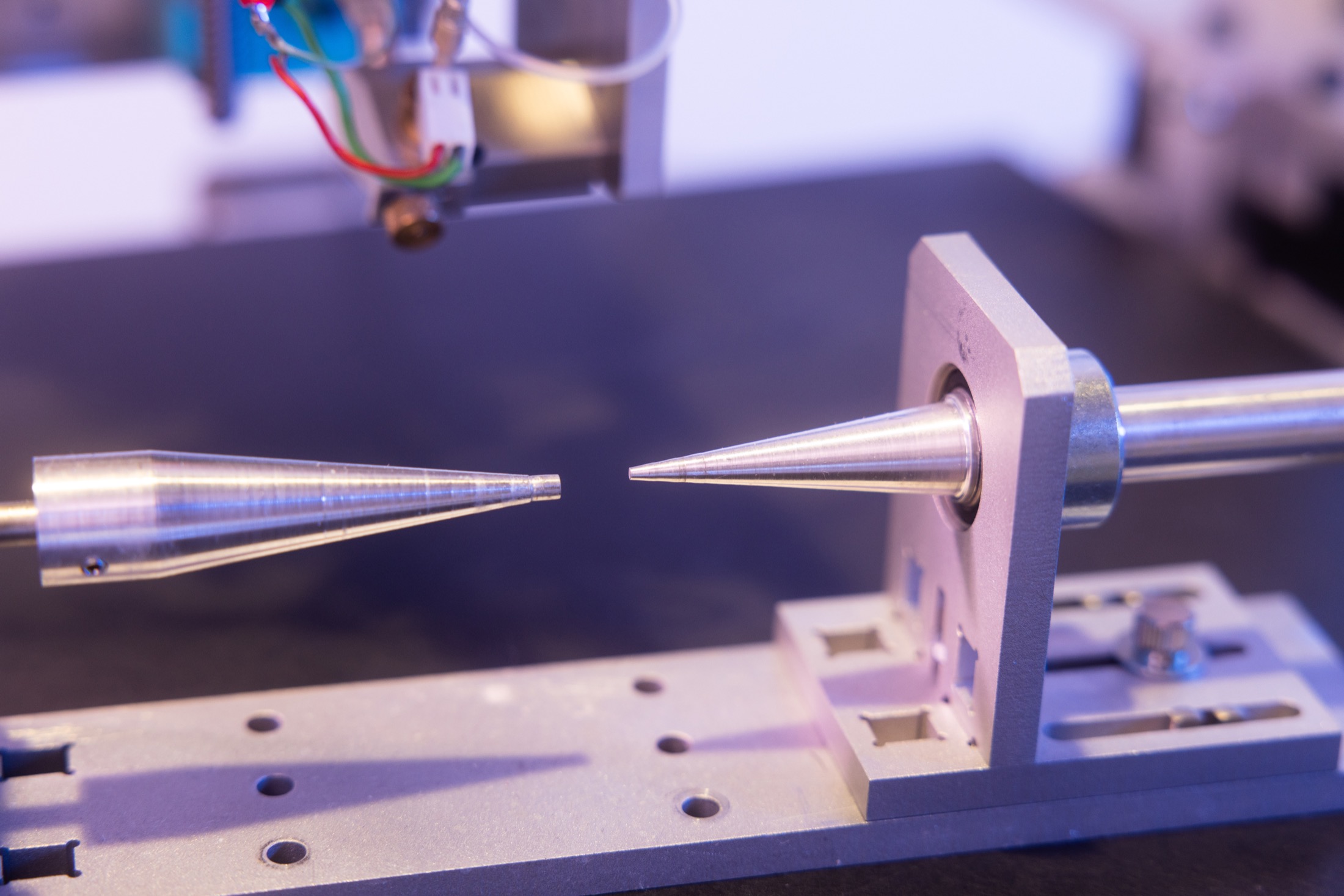
ReJI can form and deposit cell-laden gels through reactive jet impingement. A cardiac application still requires model-specific work on cell preparation, hydrogel composition, geometry, culture, handling and the selected measurement system.
Evidence pathway
A 2026 peer-reviewed paper reports ReJI-bioprinted high-cell-density cardiac constructs with sustained contractile function. The associated dataset is openly available through Newcastle University. Further evidence is needed for any specific compound-testing or safety-pharmacology use.
Read the peer-reviewed cardiac publicationJetBio does not claim that the published construct is a regulator-qualified safety assay, a replacement for all animal studies or a validated predictor of clinical outcomes.
Feasibility questions
Define the control behaviour and the direction, scale and timing of a meaningful response.
Set criteria for construct dimensions, cell distribution, baseline function and culture performance.
Specify dosing route, concentration range, duration, sampling and relevant material interactions.
Consider operators, plate handling, instrumentation, analysis and repeatability across intended settings.
Related guidance
Explore application fit, modularity and a staged feasibility route for academic or institute work.
Visit the researcher journeyDefine context of use, performance, robustness, scale and the evidence needed for programme adoption.
Read the drug-discovery guideStart a useful conversation
Share the cells, architecture, assay, controls and evidence threshold. JetBio will assess whether a scoped development project is credible.