
Specify the programme decision
Connect the biological endpoint to a defined stage, therapeutic question and action.
For pharma, biotech and CRO teams
JetBio works from a defined drug-development question towards a fit-for-purpose 3D model and reproducible workflow. The route begins with context, acceptance criteria and operational fit, not a generic printer demonstration.
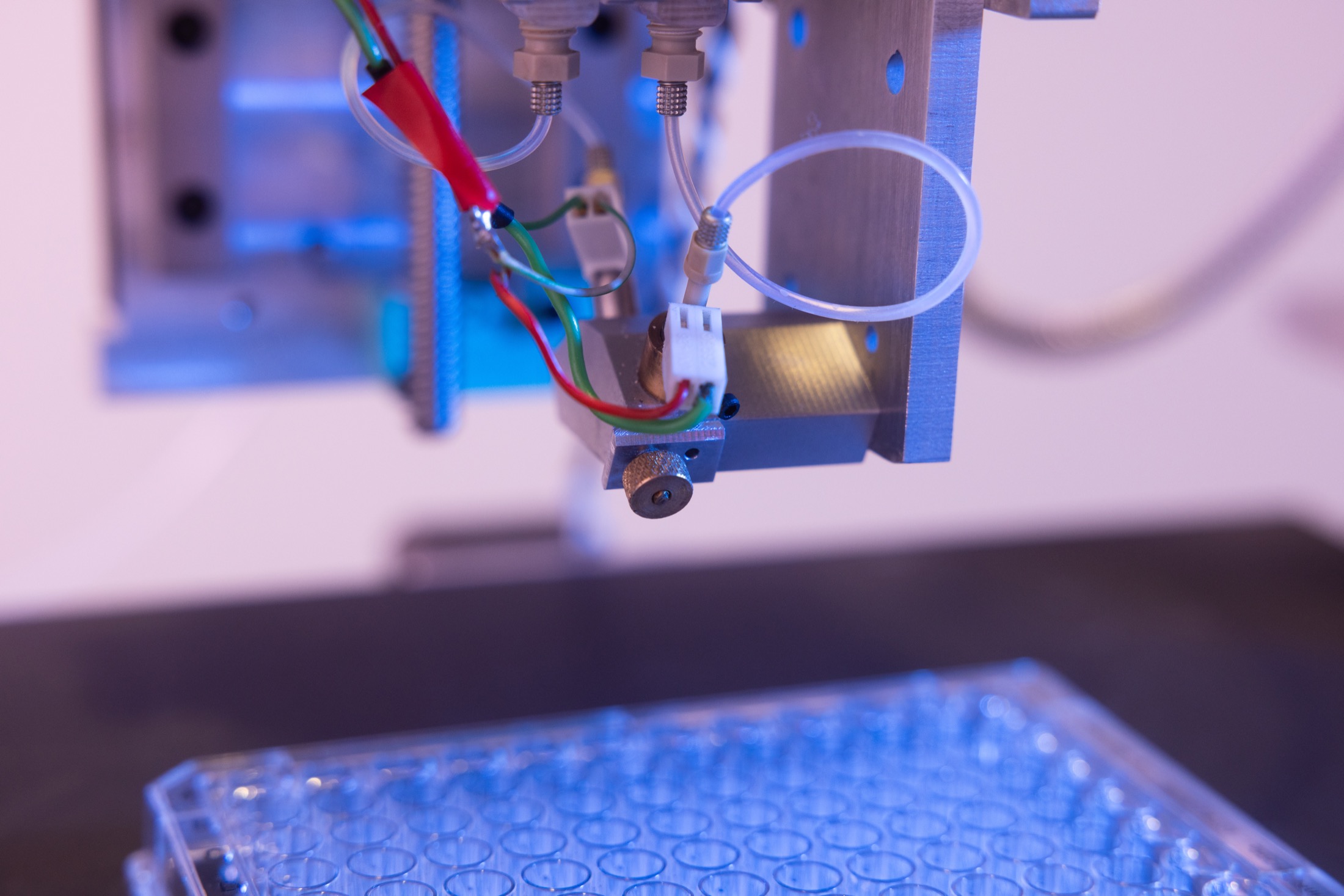
A decision-led starting point
The same model cannot answer every discovery, efficacy or safety question. A credible programme states where the model will be used, what it will measure and what decision its output may inform.
Connect the biological endpoint to a defined stage, therapeutic question and action.
Select cells, materials, architecture and culture conditions around the biology that matters.
Include operators, formats, throughput, controls, readouts and transfer requirements in the development brief.
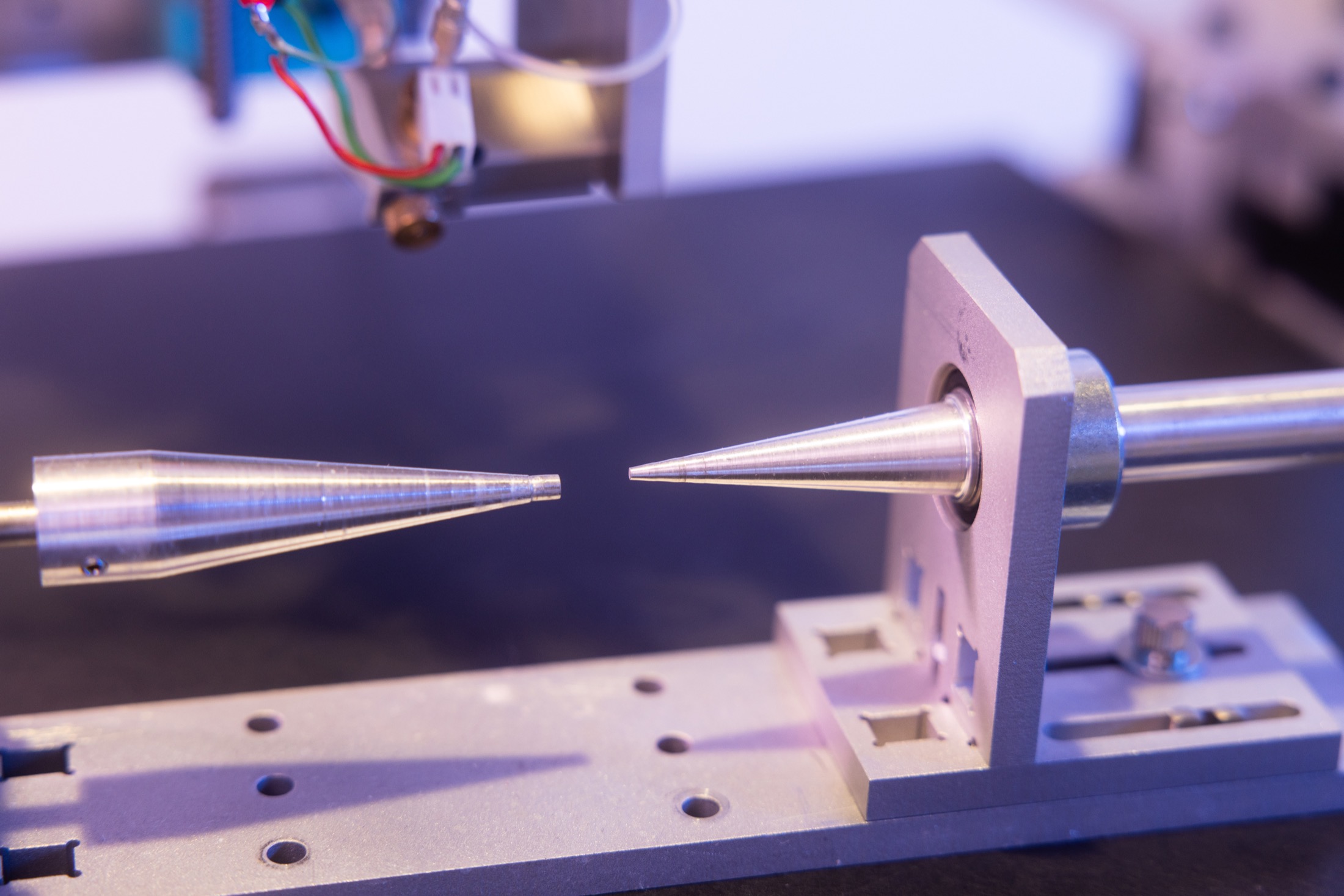
Applications-led modularity
Reactive jet impingement, microvalve and inkjet development modes offer different routes for placing cells and materials. A project may use one mode or combine complementary capabilities, subject to material compatibility and the required model architecture.
Evidence requirements
The ABPI and NC3Rs identify robustness, validation, standardisation and scalability as central gaps between promising academic models and routine pharmaceutical use. JetBio does not represent research deployments as qualified drug-development tools.
Read the ABPI and NC3Rs landscape reviewCommercial pathway
Align on therapeutic area, programme stage, current model and decision need.
Define materials, format, comparator, controls, evidence gates, responsibilities and commercial terms.
Generate relevant evidence against a bounded work package and record limitations as well as results.
Review the evidence, operational fit, support model and next procurement or co-development step.
Frequently asked questions
Potential uses include disease-model development, target and mechanism research, assay development and selected safety or efficacy studies. The relevant use must be defined for each programme rather than assumed from the technology alone.
No. Human-relevant in vitro models may reduce or replace animal use in defined contexts, but that requires suitable evidence, validation and, where applicable, regulatory engagement. JetBio does not make a blanket replacement claim.
Selected multiwell workflows form part of the development pathway. Required plate format, replicate number, handling, readout and automation interfaces must be assessed during scoping.
The usual starting point is a confidential fit discussion followed, where appropriate, by a scoped feasibility or application-development project with agreed evidence gates.
Enquiry form
Share the context of use, current model, readout, format, throughput and evidence threshold for a confidential fit review.
Please do not include confidential, personal health or unpublished research data.
Start a useful conversation
Examine the modular architecture and the boundary between demonstrated research and commercial proof in progress.