
01
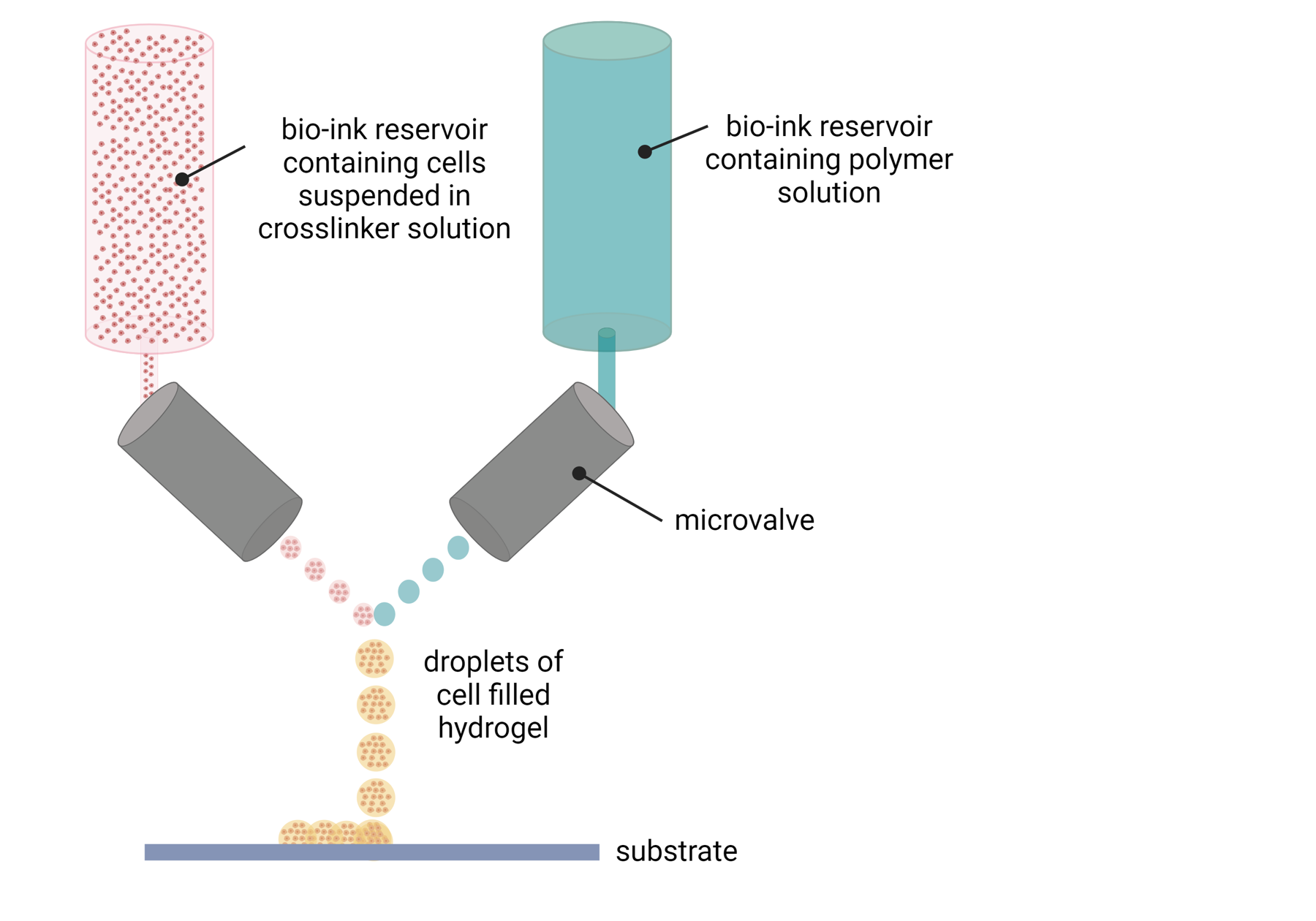
Effect of bio-ink physical properties on droplet volume in the reactive jet impingement 3D bioprinting system
Examines how viscosity and surface tension relate to ReJI droplet volume, including the processing of cell-filled hydrogel systems.
Peer-reviewed research
Explore the published research that underpins Reactive Jet Impingement bioprinting, from high-cell-density gel formation to structured co-cultures and application studies.
Research foundations
These publications were produced by researchers involved in developing and applying ReJI technology, primarily through Newcastle University collaborations. They are presented as scientific evidence, not as proof of a finished commercial product or universal performance.
Publication library
Open each DOI to review the publisher record, methods and full evidence boundary.
Examines how viscosity and surface tension relate to ReJI droplet volume, including the processing of cell-filled hydrogel systems.
Studies ReJI deposition of chondrocyte-containing hydrogels onto collagen membranes and the control of cell distribution and density.
Demonstrates ReJI-produced laminar co-cultures with defined interfaces and investigates extracellular matrix production.
Compares ReJI hydrogel-based cell seeding with conventional seeding and studies migration into porous bioceramic scaffolds.
Introduces reactive jet impingement bioprinting for high-cell-density hydrogel deposition and bone microtissue fabrication.
Evidence in context
Peer review helps establish the process, methods and observed research outcomes.
A new model still requires application-specific materials, controls, readouts and success criteria.
Repeatability, usability, support and transfer must be demonstrated for the intended workflow.
Start a useful conversation
Tell us the cell system, material, architecture and readout you need. JetBio will help assess which evidence is relevant and what a feasibility study must still establish.