
Applications

Better models begin with a sharper question.

JetBio is focusing initial commercial development where print flexibility can create meaningful experimental value. Each pathway starts with scientific fit and ends with agreed evidence, not a generic printer demonstration.

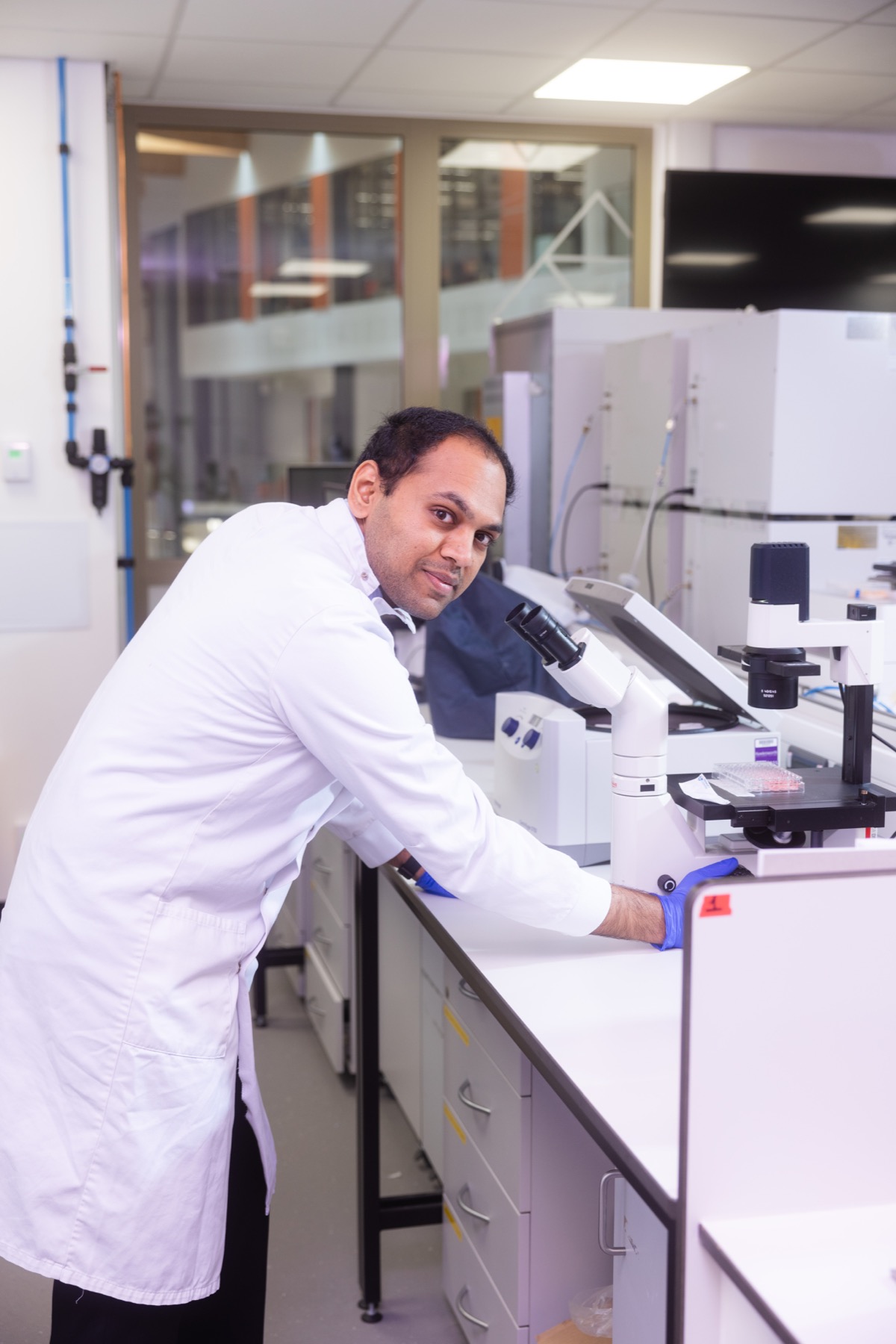
Researcher working with microscopy equipment in a laboratory
01 / CANCER

Cancer and leukaemia microenvironments

Model disease in the context around it.

Cancer biology is shaped by cells, extracellular matrix, spatial organisation and changing interactions. JetBio’s development pathway is relevant where a simple cell suspension or uniform gel cannot answer the research question.

What needs to be placed?

Define the cell populations, gel components and spatial relationship the model needs.

Which endpoint matters?

Set the readout, sampling points and reproducibility criteria before process development.

Where does density matter?

Assess whether high cell-density gel deposition is material to the biological hypothesis.

How will the model scale?

Consider plate format, replicate number and handling constraints from the outset.

Explore 3D bioprinted cancer models
02 / STEM

Stem cell and developmental biology

Pattern cells and materials with intent.

Developmental models often depend on gradients, neighbouring populations and material context. A complementary-print-mode approach creates more options for designing that environment.

Which interactions drive the model?

Identify the cell-cell and cell-material relationships that must be preserved.

What changes over time?

Define maturation, differentiation or morphogenesis milestones that the workflow should support.

Which materials are essential?

Review the gel chemistry, additives and any selected structural substrate.

What is practical in your lab?

Map the print step into culture, imaging and downstream analysis workflows.

Explore stem cell bioprinting
03 / SAFETY

Safety pharmacology and cardiac research

Create structured cultures for earlier learning.

Human-relevant in vitro models may help research teams investigate biological response earlier. JetBio’s role is to enable the physical model and workflow, not to make unproven claims about downstream drug-development outcomes.

What function will be measured?

Start from the biological endpoint, assay and instrumentation.

What architecture is required?

Define cell composition, material context and geometry needed for the readout.

How will consistency be judged?

Agree practical measures of print and culture reproducibility.

What would change a decision?

Connect the model output to a clear experimental or programme decision.

Explore cardiac and safety models

Start a useful conversation

Your model may be the next application pathway.

If your work depends on cell density, spatial patterning, multiple materials or a difficult lab format, let us test the fit.

Discuss your model